
Amplio Pharma wants its medicine in pharmacies
Why develop new medicine when existing products could work much better? With this in mind, Marguerite Mensonides and her team are building Amplio Pharma from their base in Amsterdam. The biotech company aims to make the treatment of rheumatism more effective and affordable.
According to Mensonides, the company owes its current success largely to its network in Amsterdam and North Holland.
“As a chemist, you are God.”
This remark, made in a lecture by Professor Ben Feringa – who later went on to win the Nobel Prize – struck a chord with the young Marguerite Mensonides. A chemist creates something that didn’t exist before, he explained. “When you’re eighteen and have a personality like mine, a message like that really hits home. I thought, being a goddess – that sounds rather appealing.”
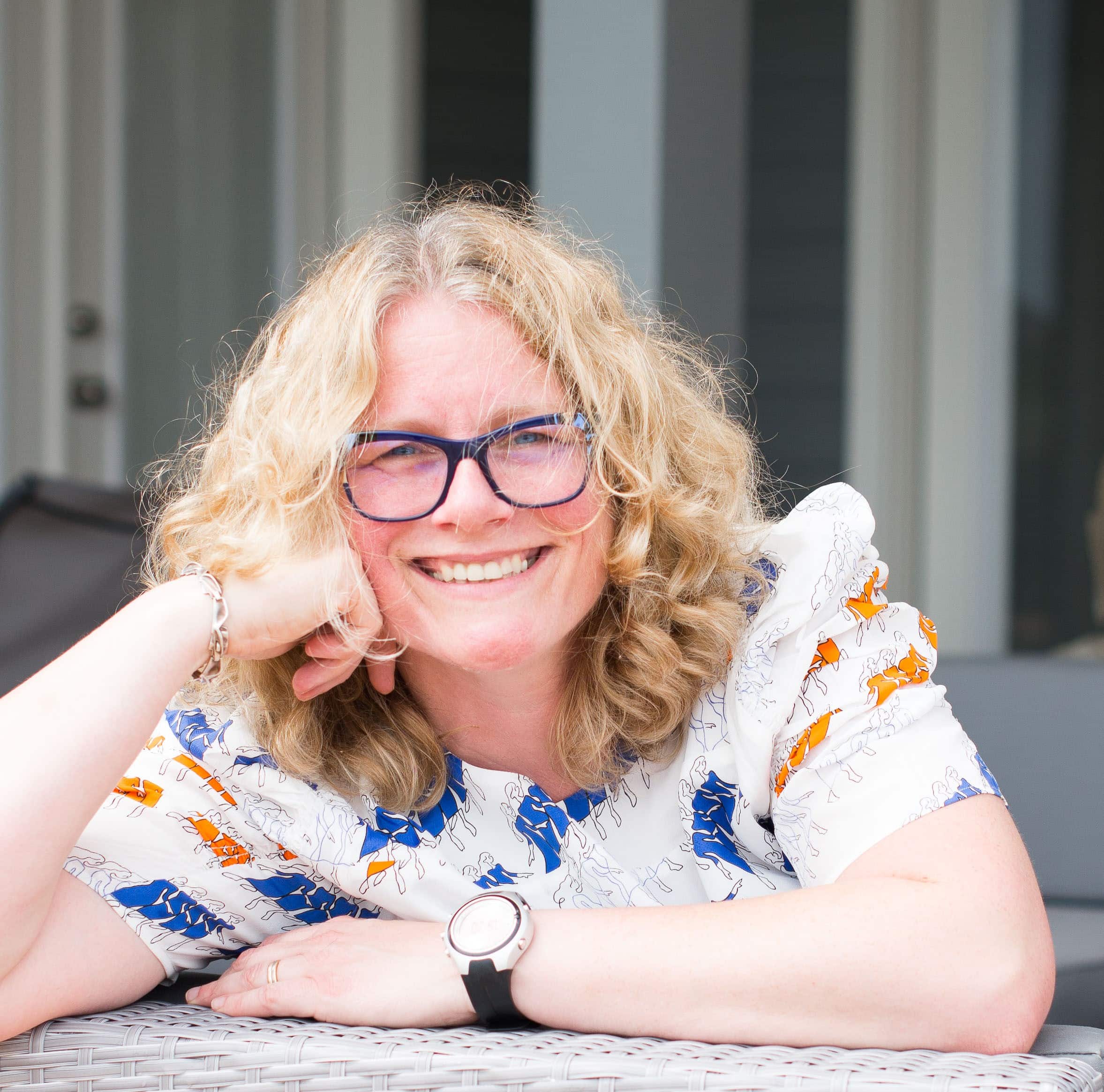
Marguerite Mensonides, CEO of Amplio Pharma
Mensonides specialised in medicinal chemistry and went on to work in the pharmaceutical industry. She discovered that devising new molecules is one thing, but that only a small proportion ultimately develop into effective and safe medicine.
“Our bodies are so complex that very few new substances do exactly as hoped, in the right place, without simultaneously causing unacceptable side effects. As a result, the vast majority don’t reach the finish line.”
That experience gave her a different perspective. Maybe the greatest benefit does not always come from developing something completely new. Perhaps we should take a closer look at medication that already exist.
Old medicines, new opportunities
This is exactly what Amplio Pharma does. The company does not develop entirely new molecules, but seeks to make existing, proven medicines work more effectively.
Its first product is NovoBioJect, a potential new treatment for rheumatoid arthritis. Most patients start on methotrexate, a relatively inexpensive medicine that has been in use for decades. For a significant proportion of patients, it is not effective enough, meaning that additional and more expensive medication is required.
According to Amplio Pharma, methotrexate leaves the cells too quickly where it is supposed to work. NovoBioJect combines it with a second known substance that partially blocks the exit. This ensures the medicine remains where it is needed for longer. It is not about getting more medicine into the body, but about preventing more medicine from leaving the target cell.
“When blocking the exit, the active ingredient stays in the right place for longer”, explains Mensonides. “This may allow the medicine to work more effectively, without increasing the dose.”
Research will have to show whether patients actually benefit from this. If so, they may not need to switch as quickly to more expensive follow-up treatments. This could improve their quality of life and help keep healthcare more affordable.
‘Anyone could think of that’
The approach sounds almost too logical. “We’re often told: ‘This is so simple – if it worked, wouldn’t it have been done ages ago?’ But people say the same thing about Mondrian. A few lines and three colours. Anyone can do that! But one has to be the first to think of it and just do it.”
The apparent simplicity doesn’t always fit with the traditional image of pharmaceutical innovation.
“We often hear that you can’t properly protect an improvement to an existing medicine”, says Mensonides. “But that’s a misconception.” Amplio Pharma holds a so-called ‘composition-of-matter’ patent on the specific combination of methotrexate and novobiocin in NovoBioJect. This protects not only the idea, but also the actual medicinal product and its therapeutic application. That makes the therapy commercially attractive to pharmaceutical companies as well.
Nevertheless, within the sector, a great deal of attention and funding is directed towards new molecules, gene therapies and other entirely novel treatments. Existing medicines are all too easily viewed as a closed chapter or a market in which there is little left to gain.
According to Mensonides, this is a missed opportunity. “Old medicines are of enormous value to patients and doctors. We already know a great deal about how they work and their safety. Yet there are sometimes still major gaps in the way they are used. This gets too little attention, because everyone is focused on the next new molecule.”
From Lund to the Netherlands
Amplio Pharma was founded in Lund, where Mensonides set up the company, together with her former AstraZeneca colleagues Charlott Brunmark and Karin von Wachenfeld. However, they found it difficult to get the business off the ground in Sweden. The focus there was very much on entirely new medicines and technologies, whilst in the Netherlands, consideration had long been given to the more efficient use of medicines.
After starting out in Leiden, the company met a research group at Amsterdam UMC. The group had developed a crucial measurement method, which enabled Mensonides to demonstrate exactly how NovoBioject works – and how key biomarkers for efficacy can be measured, for example, during a Phase 1 clinical trial. Once knowledge from Amsterdam UMC was also commercialised via Amplio Pharma, this paved the way for investment from Amsterdam UMC Ventures Holding, Innovatiefonds Noord-Holland and, later, ROM InWest.
“The move to Amsterdam ultimately ensured the company’s survival. Without the knowledge and funding here, it is doubtful whether Amplio Pharma would still exist today.”
The company is now poised to take its next major step. According to Mensonides, the Phase 1 clinical trial has been successfully completed. Not only do the substances used appear to be safe to administer, but the researchers also observed a biological signal consistent with the intended mechanism of action: significantly more of the drug is indeed being stored in the relevant cells.
The next study must demonstrate whether this leads to more patients recovering more quickly. Amplio Pharma requires approximately ten million euros for this.
Amsterdam is too modest
According to Mensonides, the Amsterdam region has everything it needs to play a much greater role internationally in Life Sciences & Health. There are leading hospitals and research institutions, experienced researchers, patient organisations, investors and an increasing number of start-ups.
“Amsterdam may be suffering from its own success. There is so much going on here that Life Sciences & Health gets overshadowed. In a region with a single clear specialism, it is easier to distinguish yourself through that.”
This requires more than just communication. The regional network must continue to grow, and stakeholders need to meet more often. Start-ups, established pharmaceutical companies, research institutions, investors and policymakers all need to sit around the same table.
“The infrastructure may seem relatively new, but it is made up of highly skilled people. Now we must ensure that the network grows and that companies receive long-term support. Life Sciences & Health is a long-term endeavour.”
Our medicine at the pharmacy
“Eagles guitarist Glenn Frey once said: ‘I wanted to hear my record on the radio.’ My goal is to see our medicine on the shelves at the pharmacy. It might not quite happen within five years, but it should certainly be possible within ten. When NovoBioJect has eventually become available, North Holland will have played a decisive role in that. I hope that a few people will know it’s there because we’ve been pushing and pulling against the tide for years.”
9 October 2026
Learn more about
Contact Us

Share this article
If you would like to stay informed,
Follow us daily on LinkedIn and sign up for the Board Update newsletter.