Novartis: ‘Region as driver for medical breakthroughs’
From the laboratory to the patient: in the Amsterdam metropolitan region the drug development chain is as closely integrated as nowhere else. Diana Villavieja, Director of Novartis Netherlands, witnesses every day how science, healthcare and industry come together here, and what leaves room for improvement.
This interconnection within the health sector is no coincidence. The region’s strong scientific environment and its open, collaborative ecosystem ensure that innovations reach patients more quickly and that science is translated into social impact.
This is particularly relevant for Novartis. The Swiss company has been operating in the Netherlands for over 45 years. Nearly 250 employees work at the Dutch head office in Amsterdam. Novartis’ medicines reach more than 600,000 patients across the Netherlands every year.
Innovation is key
In the fields of cardiovascular disease, oncology, immunology and neuroscience, Novartis is developing new treatment options for patients and is contributing to the Dutch innovation and research environment.
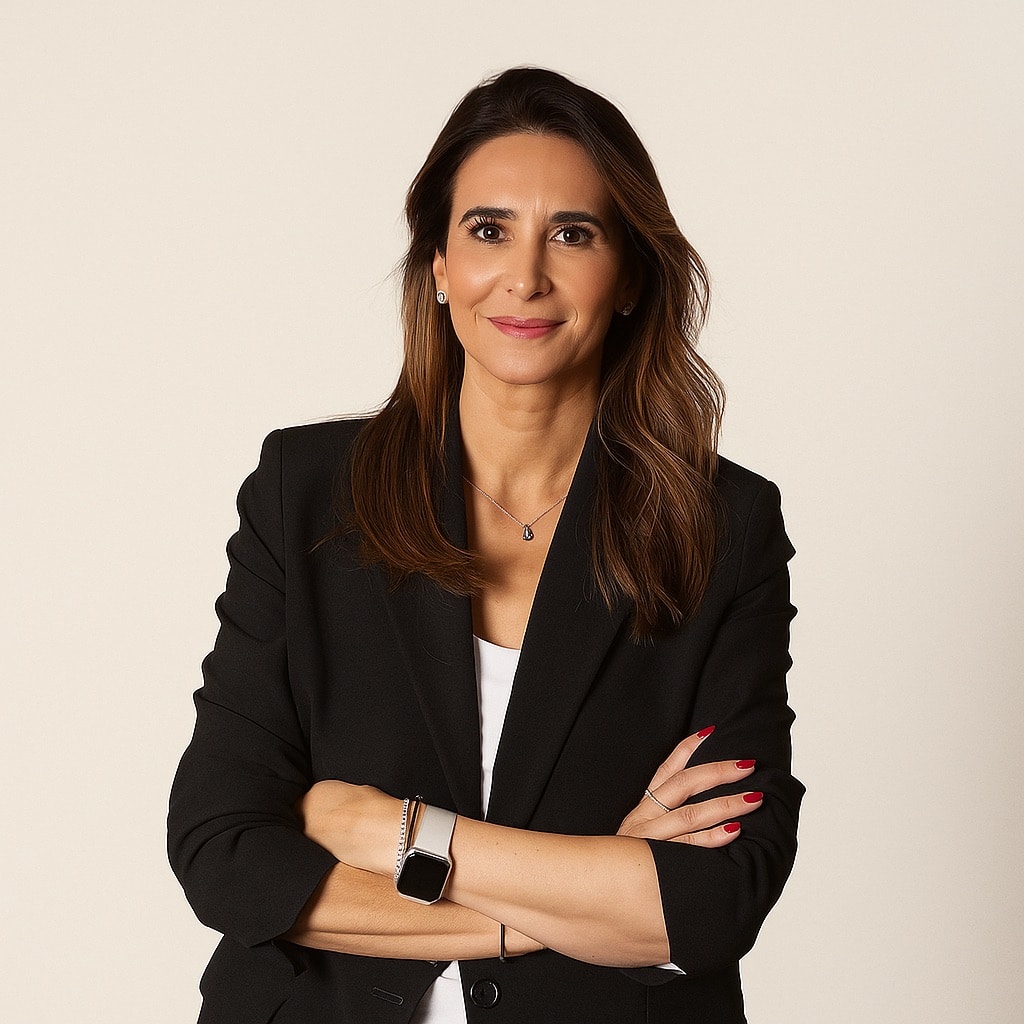
Diana Villavieja, Managing Director of Novartis Netherlands
The development of a new medicine by a pharmaceutical company can easily take ten to fifteen years and cost between 2 and 3 billion. Only a small proportion – less than 10 per cent – ultimately makes it to market.
Diana Villavieja, Director of Novartis Netherlands, is involved in this entire process, from research to clinical practice. She began her career as an engineer and has been working in the international pharmaceutical sector for almost two decades. Here, she has held various roles at the intersection of strategy and innovation.
Preventative check-ups
Villavieja headed up the oncology team at Novartis Spain, where she saw first-hand how medical innovations and awareness can make a difference. “I’m a strong advocate of preventative check-ups, for breast cancer, for example. Please do have these check-ups, for your own sake and for the sake of your loved ones. The earlier it’s detected, the better the chances of a cure.”
She also knows how complex the development of new medicines is. “It often starts with an idea, an initial discovery,” she says. “But it takes years before such an innovation actually reaches a patient.”
During that period, a medicine goes through various phases: from fundamental research to clinical trials and, ultimately, production and distribution. At every stage, medicines that fail to meet the required standards of efficacy and safety are weeded out.
All the links are closely interlinked
“It’s a process that takes ten to fifteen years,” says Villavieja. “And even then, you can never be sure it will succeed. You need all those links – from science to healthcare and industry. If just one part doesn’t work properly, the whole process slows down. In and around Amsterdam, those parties are situated close together. That makes collaboration easier and speeds things up. You need each other at every stage. If you can find each other quickly, you make progress faster. That’s why our Amsterdam office also plays an important role internationally.”
At the same time, that position cannot be taken for granted. Europe faces the challenge of strengthening its competitiveness and investment climate. Whilst other parts of the world are investing heavily in research, technology and innovation, Villavieja believes it is important that the Netherlands, too, continues to build strong ecosystems in which knowledge institutions, healthcare organisations, businesses and public authorities work together. It is precisely in this regard that the Amsterdam region can play a key role. “You must continue to invest in collaboration and in an attractive environment for research and innovation.”
Healthcare as an investment, not a cost
According to Villavieja, the greatest challenge lies in making innovations available and recognising their value. New treatments often already exist, but do not always reach (Dutch) patients. Access, regulation and decision-making play a major role in this.
This also presents a joint challenge for the region. “We need to learn to view investment in healthcare differently,” says Villavieja. “Not just as a cost, but as something that creates value in the long term – for patients and for society.”
Give patients a voice
This calls for collaboration between businesses, research institutions and the government. But according to Villavieja, that is no longer enough: patients and society must also be given a voice.
To strengthen this broader collaboration, Novartis has recently become a partner of the Amsterdam Economic Board, the ideal platform where these parties can come together. For example, the company is also a member of the MRA met Hart coalition, which aims to improve and equalise heart health in the region, partly through the use of data, and of the De Slapende Reus coalition, which focuses on raising the profile of and fostering collaboration within the Life Sciences & Health ecosystem in the Amsterdam metropolitan region.
“If you bring parties together at an earlier stage and look for solutions jointly, you can really make progress,” says Villavieja. “The foundation here is strong. Now it’s a matter of making better use of it.”
22 October 2026
Learn more about
Contact Us
Share this article
If you would like to stay informed,
Follow us daily on LinkedIn and sign up for the Board Update newsletter.